Sunday, January 27, 2013

To Poach Fish


To poach is to gently cook in liquid, the liquid being a stock, broth, wine, or maybe a syrup depending on what is being prepared.
The temperature remains fairly low, and most of the time poaching calls for the liquid to remain just at a simmer. Fish is fragile, and this helps to maintain it's shape and texture.


We will first prepare a court bouillon in which to poach the fish.
The purpose of the method is to delicately flavor the fish, and since the heat is low and the cooking medium a liquid that will completely envelop the fish, the dish will also retain moisture.


The purpose of this post is mostly as a poaching lesson and I think it's a good technique to know. However, I also think that nowadays people want and expect more flavor from their food than what poaching would deliver (thus, sauces can save the day, so to speak).  Poached fish is something you don't see as often as other preparations.


The flavors are definitely mild, and I can't imagine you would want to serve it alongside anything that might overpower it. 
Some days are mild fish sorts of days, and that's ok.
In this case, I'm keeping it very simple: there's no sauce other than the poaching liquid. You could, of course, prepare a vinaigrette or beurre blanc for the fish if you so desire. Likewise, a caper-y, buttery sauce with a little bite might be nice, too.
And it's pretty healthy and relatively light since there's just a bit of butter used to saute the leeks, which then becomes part of the poaching liquid.


When making poached fish, you'll probably want a more sturdy fish as opposed to those more delicate types that could potentially fall apart in the cooking liquid. And you could certainly poach smaller fillets of fish, maybe 5-8 oz. each, but the cooking time will differ. Pay attention, watch for them to be cooked through and don't overcook. Those fish that have a thicker fillet, and those with more dense flesh will take a little longer. It's not so much science as it is common sense.


I went to the store and after speaking with the fishmonger, it seemed that tilefish was along the line of what I was looking for (and it was fresh). I've never had tilefish before, but the cost of sea bass in quantity is generally prohibitive, and the halibut I was prepared to buy prior to seeing the fish selection did not end up being my best option.


Flexibility is important when dealing with fish. I'm not saying I'm the most flexible person out there when it comes to food after I've finally decided what I want, because I can promise that I certainly am not (however, I can honestly and thankfully state that my adaptability has improved). If I have my mind set on something, and the planned menu is not to be... well, there's nothing that can be done.
Anyway, rigidity will not help you in the least when it comes to fish. What you really want may not be any good or even available when you go shopping (especially if you happen to be of the landlocked persuasion).
Sure, you can have a general idea of what you want, but speak with the fishmonger. See what's fresh. See what he might recommend and go from there.


P.S.
Parsley does wonders for brightening the look of a poached fish. Not that it's completely unappetizing,  but visual appeal can be pretty important for food.

Poached Fish With Leeks
(Poaching technique from Mark Bittman)
Serves 4

2 c (480 ml) water
1/2 c (120 ml) white wine
1 lemon, thinly sliced
1 medium onion, roughly chopped
1/2 rib celery, roughly chopped
3 cloves garlic, crushed and roughly chopped
10 black peppercorns
1 t (7 g) Kosher salt
5 sprigs of thyme
1 bay leaf
3 T (42 g) butter

3 medium leeks, white and light green parts only (sliced lengthwise, then cut crosswise into 1 cm to 1 inch pieces, washed twice in cool water to remove sand and dirt, and drained)

2 fish steaks, skin on, 1 lb. each (or a little less)

Additional water, white wine, fish or vegetable broth if needed

Lemon for serving (optional)

Place the water, wine, lemon slices, onion, celery, garlic, peppercorns, salt, thyme, and bay leaf in  a medium saucepan. Bring the mixture to a boil, reduce the heat, and simmer 10 minutes. Strain, discard the solids, and cool the broth.
Melt the butter in a large dutch oven or saucepan over medium heat. Saute the leeks until softened, a few minutes. Place the fish steaks on top of the leeks and pour enough stock to just cover the fish (add a bit of extra liquid if necessary). Bring to a full boil, cover, and remove the pan from the heat. Let sit at least 10 minutes to finish cooking in the residual heat. The fish will be done when it is opaque and flakes easily with the tip of a knife.
Carefully remove Serve the fish with leeks and some of the poaching liquid, salt and pepper for individual seasoning, as well as wedges of lemon if desired.

Saturday, January 19, 2013

Baked Rice Pudding


Rice pudding is a comfort food, especially nice in the wintertime because of the texture and since it's usually a bit rich- and most especially comforting if it's served warm.


I think of vanilla as a comforting flavor, too. It can be plain, yes, but that's not a bad thing. Vanilla is familiar and certainly non-offensive. There are different varieties of vanilla, and some are preferred over others, but in general I can't see it as being a jarring flavor or a flavor that many people have a true distaste for.
Vanilla blends so well with so many other spices, most notably in the realm of sweets.
It can, of course, stand on it's own as the main attraction, but that's not necessary. Along with other flavors, vanilla adds some nice depth- and if it were missing, the taste of many things probably wouldn't be quite right.

It's hard to go wrong with some good vanilla.


Arborio rice is used here, and as in the case of risotto, the pudding becomes thick and creamy because of the rice's starchiness. It has a higher starch content than most other rices and has the wonderful ability to absorb more liquid while maintaining a good texture with slightly firm and individual grains.


This version is baked instead of cooked on the stovetop (one obvious benefit being that much less stirring is required). It ends up being a thicker rice pudding than others I've made (on the stovetop), but it can always be thinned out a little with a bit of milk before serving if you would like.


If you prefer it a little thicker, cook a little longer... it all depends on how you like the consistency.


And I have to say it's convenient that rice pudding can be served as either breakfast or dessert- it mostly depends on how it's dressed up. 


Other potential flavor additions:

Rum-soaked raisins

Toasted almonds

A few gratings of fresh nutmeg


The zest of an orange


Rosewater
Chopped pistachios
Saffron

A bit of ground cardamom

Strawberry, raspberry, or cherry jam spooned over the top before serving


Baked Rice Pudding
serves 6 or more

1 c (100 g) arborio rice
3 c (750 ml) whole milk
1 1/2 c (375 ml) heavy cream
1/2 c (110 g) sugar
1 vanilla bean
Pinch of salt
3 T (42 g) butter
Cinnamon

Preheat oven to 300 degrees F/ 150 C.
Rinse the rice well in cool water. Drain and set aside.
Slice the vanilla bean in half lengthwise and scrape out the seeds. Add the seeds and pod to a medium saucepan along with the milk, cream, and sugar. Bring to a simmer over medium heat. Reduce the heat if necessary to maintain a simmer for about 5 minutes, stirring occasionally.
Remove the pan from the heat, stir in the rinsed rice, salt and butter along with a few pinches of cinnamon to taste. When butter has melted completely, pour the rice mixture into an oven-proof dish with room to spare (maybe about 3 qt. or L), or leave it in the pot if it's oven safe, and cover tightly with aluminum foil.
Place the dish in the oven and bake 45 minutes. Remove the dish from the oven, carefully remove the aluminum foil, stir the rice, replace the aluminum foil and put the dish back into the oven. Bake another 15 minutes, repeat the stirring process, and bake for a final 10 minutes.
Serve warm.


Saturday, January 12, 2013

Cauliflower Steaks with White Wine Pan Sauce


Cauliflower, like the potato, is a blank canvas.


But while most will probably say they like (or love) potatoes in one form or another,  the same does not apply to the poor cauliflower.
A lot of people hate it.
Is it just the bland taste? Is it that it's creamy whiteness can turn an unappetizing shade of grey and become fall-apart mushy in texture when overcooked?
The fact that it's related to Brussels sprouts?
Were people made to eat it against their will far too often in earlier days?
Do we just need to have something as a personal protest?


I don't know for sure, but I think this could change people's perceptions of cauliflower...
Besides, anything with a good sear on it will taste good- meat or otherwise.


This method of preparation for cauliflower made it's way to my inbox several months ago, but I just recently retrieved it (and I'm glad I got back to it).
To give credit, the technique is based on that in a Tasting Table recipe from chef Jason Neroni of Superba Snack Bar in Los Angeles.
Sorry, but I have not yet tried the aforementioned recipe, I just decided on something a bit different. Among other more minor differences, his version is served with a green olive pistou, so if that sounds like your cup of tea perhaps you could look it up.
Whichever version you choose, I think you'll find a great vegetarian meal. And "vegetarian" does not mean boring.


The sauce prepared here is a white wine reduction with capers and a lemony zip- which happens to pair very nicely with the slightly sweet and nutty cauliflower. If you're not really a lemon person or happen to be a little wary of the piquancy, maybe only start with half the lemon zest and juice.


One tip: don't get rid of the braising liquid after you remove the cauliflower. It's pretty flavorful and would be great as a base for a soup, or as the liquid for cooking beans or rice.  Just know that it's salty, so adjust as necessary.

And a thought: the sauce would be great with pan-seared fish.


Cauliflower Steaks with White Wine Pan Sauce
Makes 2 steaks, serves 2 as a meal

1 head of cauliflower
4 c (960 ml) vegetable broth
11/2 c (360 ml) dry white wine, divided
5 T (75 ml) olive oil, divided
Kosher salt
4 cloves garlic, minced
1 bay leaf
1/2 t (a large pinch) dried thyme
Zest of 1 lemon
Juice of 1/2 lemon
2 T (26 g) brined capers, drained
3 T (42 g) cold unsalted butter
Freshly ground black pepper
Freshly minced parsley (optional)


Preheat oven to 350 degrees F/175 C.

Trim the cauliflower of any leaves and cut off the root end. Stand the cauliflower on the root end and cut in half vertically. Cut each half of cauliflower again from top to bottom, so that you have two flat-sided steaks, each about 2 inches thick. Save the rounded outside florets for another use.

In a 9x13 inch pan, mix the vegetable broth, 1 c (240 ml) of white wine, 3 T (45 ml) olive oil, 2 T (35 g) kosher salt, garlic, thyme and the bay leaf. When the salt has dissolved, add the cauliflower steaks, turn them once in the broth mixture,  and cover the pan tightly with aluminum foil.

Bake about 45 minutes, or until the cauliflower is fork tender.

With a spatula, carefully remove the cauliflower to a large paper towel-lined plate and blot any moisture from the top of the cauliflower. Set aside.

Heat a large cast iron skillet over medium heat until hot (it may smoke a little), about 2 minutes. Add the last 2 T (30 ml) of olive oil. Once it shimmers, add the cauliflower and sear until deep golden-brown, about 5 minutes. Flip the steaks and sear on the other side.  Remove to plates.

Add the last 1/2 c (120 ml) of wine to the hot pan and reduce to about  2 T or (30 ml). Pull the pan off the heat and add the lemon juice and zest, capers, and a pinch of salt. Stir everything together and add the butter. Let the residual heat of the pan melt the butter and shake the pan every so often so that the sauce becomes homogenous. Add several grinds of freshly ground black pepper, taste for seasoning, and spoon the sauce over the plated cauliflower. Top with a nice sprinkling of minced parsley, if using.
Serve warm.

Monday, January 7, 2013

Îles Flottante


Soft and sweet, creamy and mild- with a little toasty crunch. 
Îles flottante (floating islands) is a dessert that combines marshmallowy meringues in a pool of vanilla bean crème anglaise topped with a drizzle of caramel and sprinkle of almond pralines.


Beautiful.   


I like the imperfect little islands with their all-over-the-place peaks as well as the dash of Jackson Pollock caramel and abstract "use your imagination!" quality of the dish as a whole.


And one really nice thing about this particular recipe is that everything can be made a couple hours ahead of time, and pretty much be assembled just prior to serving. 


The best way to deal with the soft and sticky clouds of meringue happens to be wet fingers. Really, I don't think there's any other way to remove them from the parchment paper in one piece. Just dampen clean fingers in cool water and pick up the islands at their base.


Crème anglaise is a good thing to have in your repertoire as it can be used for so many things. For example, this pourable custard can be nice on a plate with flourless chocolate cake, with fruit, or with crêpes and berries. The only problem is that it takes attention and plenty of stirring so it remains smooth. Scrambled eggs in a sweet cream isn't such an appetizing concept. 


As a little addendum, I was thinking that I would try to cook a different color every month. January will officially be white month (it seems appropriate). It's somewhat of a challenge to myself, but it also gives me a direction to go. 
And I'm sorry, I can't promise there will ever be a "blue" month.


Îles Flottante
serves 6 or 7

1 1/2 c (375 ml) whole milk
1/2 c (125 ml) half and half (or light cream)
Salt
1 vanilla bean, sliced lengthwise and seeds scraped 
5 large eggs
1 3/4 plus 1/3 c sugar (240 g), divided
Vanilla extract
Water
1/2 c (45 g) sliced almonds

To make crème anglaise:
Whisk together the milk, half and half, a pinch of salt, seeds and vanilla pod in a medium saucepan. 
Separate the eggs with the 5 yolks in a medium bowl and 4 whites in another medium bowl (reserve the last white for another use). Whisk 1/3 c (70 g) of sugar into the yolks about a minute or until the two are well combined. Set the yolk mixture next to the stove and set the whites aside.  
Have a large bowl of ice water at the ready to use as an ice bath for the finished custard.
Heat the milk mixture over medium-low heat until small bubbles appear along the sides of the pan and the mixture visibly steams a bit. Pour about 1/3 of the milk mixture slowly into the yolk mixture, whisking all the while to temper the yolks and keep them from scrambling. Pour the milk and yolk mixture back into the pan with the remaining milk and whisk to combine. Using a rubber spatula, stir the crème anglaise fairly constantly, scraping the sides and bottom of the pan. When the custard has thickened enough so that it coats the back of a spoon (I like it about the thickness of heavy whipping cream), remove the pan from the heat and pour through a fine mesh strainer into a medium bowl and stir in 1/2 t (a small splash) of vanilla extract. Place the small bowl in the larger bowl of ice water so it stops the cooking process. Stir occasionally until cool, cover and refrigerate until ready to use. 

To make the caramel sauce:
Place 3/4 c (160 g) sugar in a small saucepan with 1/4 c (60 ml) water. Tilt the pan so that all the sugar is dampened. Heat the pan over medium heat until the sugar is dissolved, but to not stir the mixture. Let the sugar mixture continue cooking until it begins to caramelize. Once you see the caramelization begin, tilt and swirl the pan to distribute the color evenly throughout the mixture. Continue cooking, swirling and tilting occasionally until the caramel is a dark amber color. Remove the pan from the heat and add 1/4 c (60 ml) water and 1/2 t (a small splash) of vanilla extract. The caramel will solidify somewhat and sputter a bit. When it stops bubbling place the pan back on the heat and stir so that the caramel melts. When the caramel reaches about 230 degrees F/110 C (thread stage), remove the pan from the heat and set aside.

Preheat the oven to 350 degrees F/175 C.

To make the almond pralines:
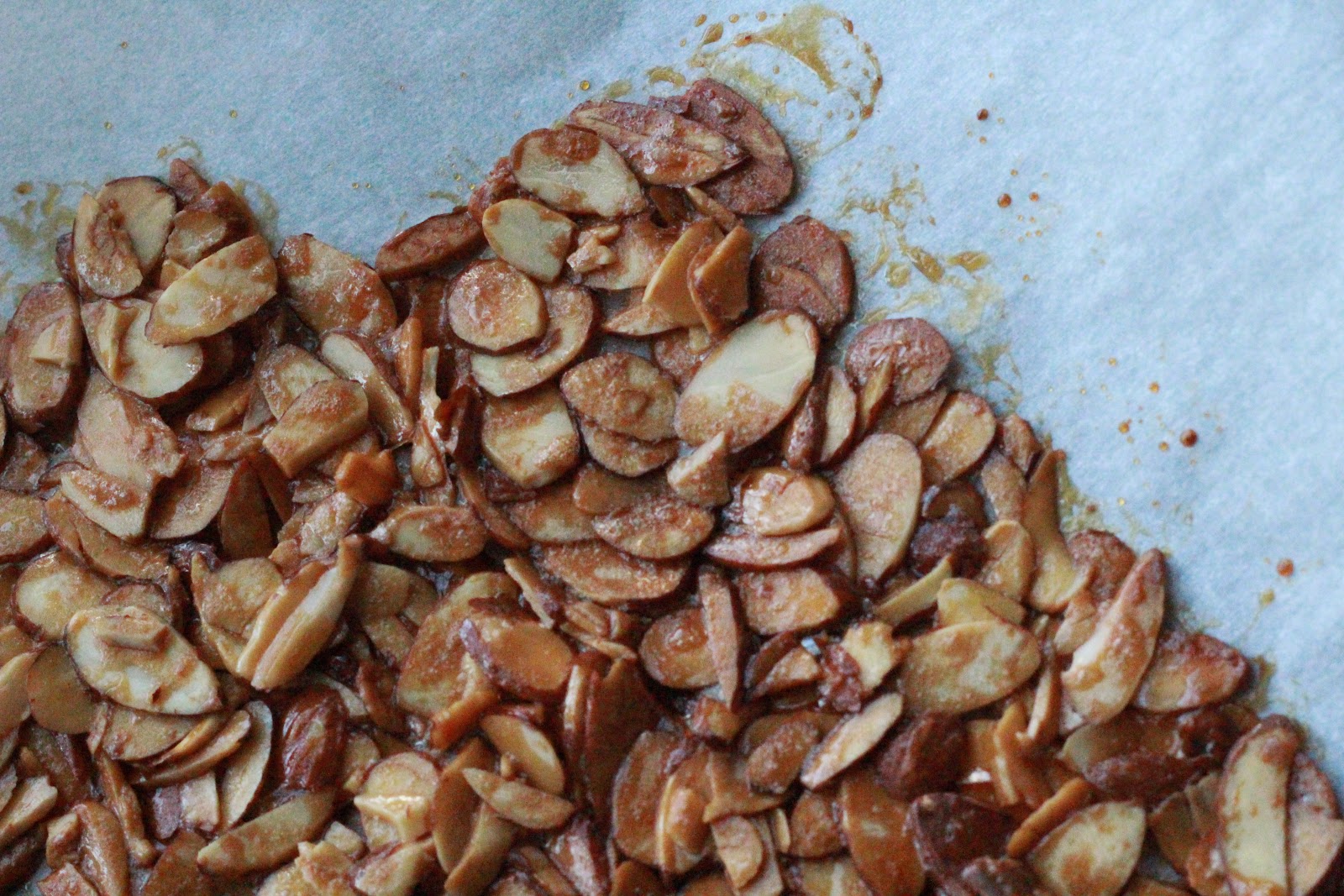
Working quickly, combine 2-3 T (30-45 ml) of warm caramel sauce with the sliced almonds. Spread the mixture onto a parchment paper lined pan and bake in the preheated oven 8-10 minutes until toasted and golden. Set aside to cool completely, then break up the pralines into pieces.

Reduce the oven temperature to 250 degrees F/120 C.

To make soft meringues:
With an electric hand blender, beat the 4 egg whites along with a pinch of salt until very frothy. Continue beating while adding 1/2 c (110 g) sugar in a slow and continuous stream.  When the egg whites reach the soft peak stage, add 1/2 t (a small splash) vanilla extract and continue beating until the whites are stiff and glossy at the firm peak stage. Using two spoons, scoop at least 18 mounds (a bit larger than a golf ball) of meringue onto a large parchment paper lined sheet pan. Bake 20 minutes and remove the pan from the oven. Cool completely.

To assemble:
Spoon 1/4-1/3 c (60-80 ml) crème anglaise onto a small plate or shallow bowl. With dampened fingers, remove 3 finished meringues from the sheet pan and place them on top of the pool of crème anglaise.  Using a spoon, drizzle the islands with caramel and finish by sprinkling with almond pralines. 

(If the caramel is too stiff to drizzle when it comes time to use it, heat and stir over low with a small splash of water. It should be fairly easy to use within a couple minutes.)

Sunday, December 30, 2012

Kedgeree


Kedgeree is an Anglo-Indian dish, traditionally served for breakfast, but it could easily be eaten at any time of day.


It's light, filling, has a beautiful combination of flavors, and quite frankly has great color for a breakfast dish that doesn't happen to be children's cereal.
You may say, "Fish and curry for breakfast?!"
Yes.


The flavors aren't so overwhelmingly intense as to be inappropriate breakfast fare in my opinion.
There's a balance.


Besides, the garam masala used here isn't a hot type of curry powder. While not strictly defined as there are many variations, garam masala has a mixture of spices like ginger, cinnamon, cloves, nutmeg, mace, and cardamom in addition to more commonly savory spices like black pepper, chili, coriander, nigella, and cumin.
If you want more heat, you're welcome to add something like chili paste or a sprinkle of chili powder to individual portions.


Make sure to find smoked fish, not silky cured gravlax or lox, but the more dry smoked fish.


Kedgeree
serves 6-8 or more

1 1/3 c (300 g) basmati rice
1 bay leaf
Salt
1 lb. (453 g) smoked salmon (or other smoked fish)
3 T (42 g) butter
1 medium yellow onion, diced
2 cloves garlic, minced
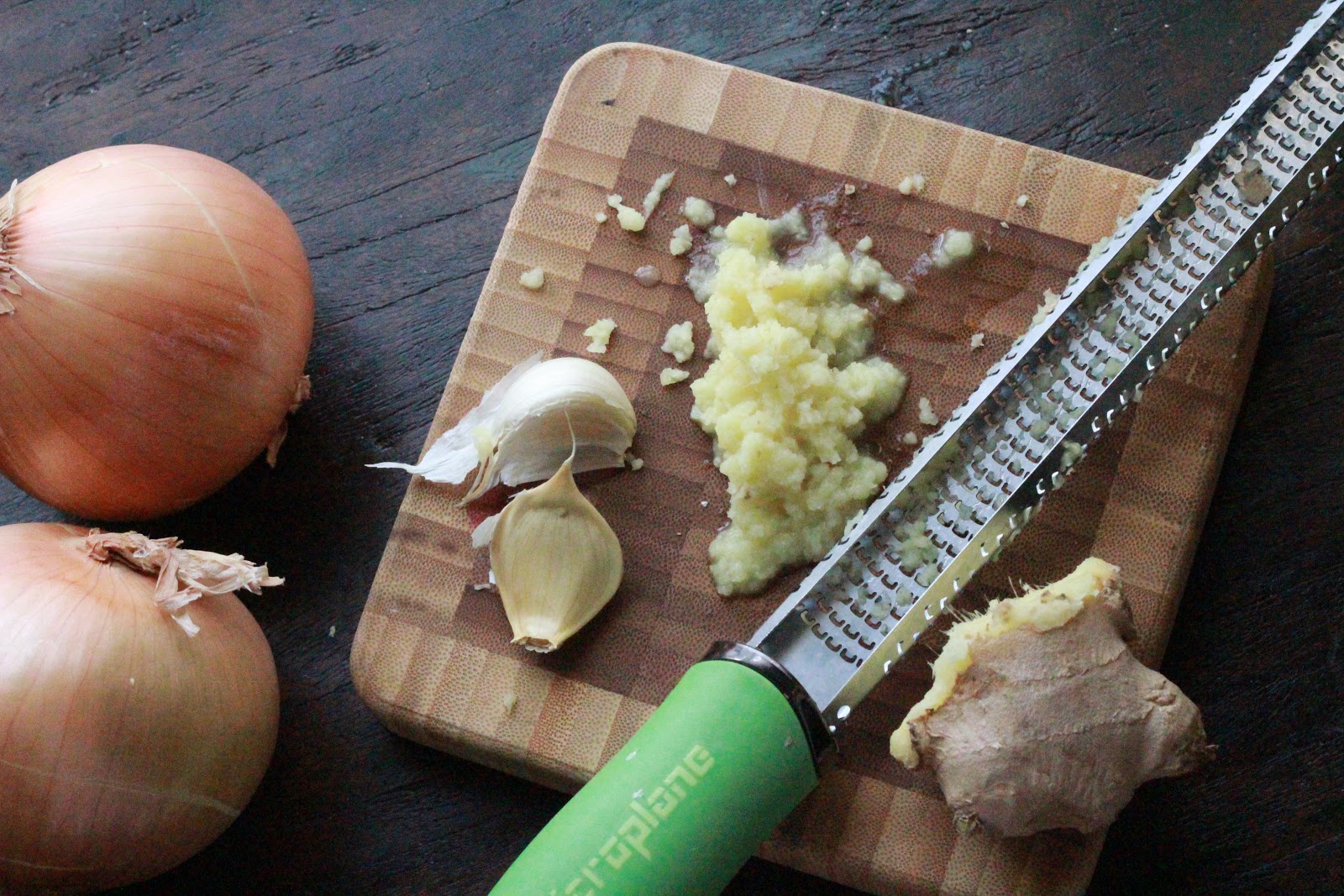
1 large thumb-sized piece of ginger, peeled and finely grated (maybe about 2 T fresh grated ginger)
2 t (5 g) garam masala (or another curry powder if desired)
1/2 t (1 g) turmeric
1 lemon
1 bunch green onions, finely sliced
1 large handful cilantro leaves, roughly chopped (or parsley or maybe a nice portion of baby spinach if you don't like cilantro), plus more for garnish
Freshly ground black pepper
3-4 large eggs, hard boiled (instructions follow)

Optional accompaniments: plain yogurt, extra cilantro, fresh sliced chili or chili paste, lemon wedges


Rinse the rice in a strainer under cool running water until the water runs clear. Combine the rice, 2 2/3 c (600 ml) water, bay leaf, and a large pinch of salt in saucepan. Bring the mixture to a boil over medium heat, stir, reduce heat to lowest heat, cover and simmer 20 minutes. Remove the pan from the heat and let steam 10 minutes before removing the lid to cool.

While the rice cooks, remove bones and skin from the fish if there are any, flake the fish, and set aside.

To hard boil the eggs, place the eggs in a saucepan and cover with cool water. Bring to a full boil, turn off the heat, and let the eggs sit in the hot water about 6 minutes. Remove from the heat and let cool several minutes before peeling. 

To make the kedgeree, melt the butter in a large pan or dutch oven over medium heat until melted. Add the onion and saute until softened, about 5 minutes. Add the minced garlic and ginger as well as the garam masala and turmeric and continue to saute about 1 minute longer. Stir the zest and juice of one lemon into the onion mixture, then add the rice and flaked salmon to the pot. Fold everything together carefully and cook until warmed through. Fold the cilantro and green onion into the rice,  and season to taste with salt and pepper. Quarter the eggs, add them to the kedgeree, and serve. 

Other options:
If you can't find or don't like smoked fish, cooking and flaking fresh fish is also an option. 
Instead of hard boiled eggs, a poached egg on top would also be nice. 

Tuesday, December 18, 2012

Brown Butter Almond Cookies


I read a little story in a magazine many years ago about a woman who made a special brown butter cookie every year for Christmas. It was a painstaking project that took her a very long time, and it always occurred from start to finish after work late into one single evening. She was up all night getting everything exactly right - browning the butter to perfection, preparing the dough, chilling it, shaping cookies in the bowl of a spoon, baking, cooling, assembling little spoon-shaped sandwiches with the precise amount of strawberry jam. As fate might have it, perhaps one or seven would disappear in the process.
Then to decide who deserved these gems and who would really appreciate them (and at this point, it seemed her pool of friends diminished... maybe they suddenly became mere acquaintances or office mates). Even then, anyone who was deemed deserving was only allotted somewhere between three and five.


I think of that story every now and then, although I have no idea why.  Maybe it's because I can't imagine making myself do something like that, going to that extent all in one go and showing up at work the next morning as a zombie.


And all for cookies!
I suppose we can say it's dedication.
I never tried to duplicate the cookies and I don't know if the recipe was even included with the story.


I was trying to make a special occasion cookie, and the above story was running through my mind along with a recent David Lebovitz post on baci di dama.
Luckily after a couple attempts it paid off and the cookies worked out beautifully.
They turn out a bit like buttery, crumbly sables, but even more so because of the ground almonds included in the dough. 


Almonds do certainly have some flavor, but they work well with so many other ingredients since they are delicately understated.  They're there and recognizable, but they don't completely overwhelm.  And browned butter? Additional nutty goodness, bronzed liquid gold.


I will admit that the dough is quite crumbly, and reminiscent of not-quite-damp-enough sand that may or may not hold up in a sand castle. The castle may or may not come crashing down as soon as it's completed.
It's a bit of a challenging dough texture-wise, but that's what gives the cookies some of their charm: they're delicate, melt-in-your-mouth and only *just* holding together.


Beautiful with coffee or tea.

Brown Butter and Almond Cookies
makes about 28 filled cookies

1 c (125 g) blanched almonds, slivered if possible
4 oz (114 g) butter
1 c (140 g) rice flour
1/2 c (106 g) sugar
A pinch of salt

Raspberry jam

Preheat oven to 325 degrees F/160 degrees C. Place the almonds on a sheet pan with sides and toast about 10 minutes, shaking the pan occasionally, until the almonds are a light golden brown. Remove the pan from the oven and set aside to cool completely.

While the almonds toast, place the butter in a small saucepan and melt over medium low heat, stirring occasionally and scraping the bottom of the pan, until the butter is browned and smells nutty (you can certainly brown it to your preference or comfort level, just be careful not to burn it).  Pour the butter into a bowl to cool, making sure to scrape all the toasty and flavorful milk solids from the pan along with the butter. Set aside.

Once the almonds have cooled, process to a coarse meal in a food processor (be careful not to go so far as to make it almond butter).
Pour the ground almonds into a bowl and add the rice flour, sugar, salt.  Mix with a spoon or spatula until combined. Add the melted and cooled butter and continue mixing until everything is incorporated. When the dough becomes difficult to mix, put the soon down and use your hands to mix and knead the dough until it all comes together. The texture of the dough will almost be like that of wet sand. Do the best you can forcing it to come together in a single mass and wrap tightly in plastic or place in a large plastic sealed bag, removing all the air.
Refrigerate 1-2 hours.

Preheat oven to 325 degrees F/ 160 degrees C. Pack small amounts of dough into the bowl of a deep teaspoon measure to shape. Alternatively, use your hands to roughly and tightly form small flattened balls, using about 7 g of dough per cookie. Place the cookies on a parchment paper lined sheet about 1 inch apart (they shouldn't spread), and bake 10-15 minutes, rotating the pan after about 5 minutes.

Remove the pan from the oven and let the cookies cool completely on the pan before removing. 

Handle the cookies carefully and place a small dollop of raspberry jam on the flat side of half of the cookies. Top each with another cookie and let the jam set a bit before serving.