Showing posts with label basics. Show all posts

Monday, February 10, 2014

The Pantry


This is something I started a while back, and it's been written because one of my sisters asked me to do so.
Apparently she was trying to look up what should be included in a well-stocked pantry, but could only find lists of things she deemed "weird" and "random."
I guess we're talking basics here- things you want around and not have to run out to the store to purchase, but I don't know how basic I'll actually be.
Maybe it's reality for some people, though others might say they have no use for something I think important.
In that case, maybe it's an example of well-stocked for Natalie's purposes.
Frankly, I don't believe anyone's going to print out this list and take it to the store with them, and I don't think there are many out there building a pantry from scratch.


These things I list should last a while shelf-life wise, and at least a week for those that expire (and for that you would check out the expiration date on the milk to be sure).
Fill in with things that you should be purchased closer to the dates they're used: meats, salad greens, many fruits and vegetables other than those I have listed.
I'm not saying anyone needs to really stock up on the perishables. Those weeks you NEED three gallons of heavy cream are probably few and far between in a home kitchen (and then the issue of economy can come up once it's gone bad and you've used less than a half gallon).  A pint, however, is a more appropriate amount.
And there's the question, what are five ingredients you always have in your shopping cart? Mine would probably be fresh garlic, fresh lemons, kosher salt, whole black peppercorns (to grind), and wedge of real Parmesan cheese (no green shakers). But then if I start thinking about other things, I wonder about whether I need to substitute good olive oil for something.... and are the salt and pepper understood, or do they have to stay on the five-things-only list? I'll keep thyme in the garden, so that's not an expense to worry about.


Then again, the whole idea could make a good challenge: you will have a plain chicken breast, salt, and pepper. You may have 4 other things to make up a completed dish. What will you do?
My only other comment is to buy the best you are able. Assume the word "good" precedes each item. You generally pay for quality. If organic is important to you, please buy it. If small businesses are important to you (and small and/or local farmers trying to eek out a living), please support them.
And if you're partial to Wal-Mart, I don't really want to hear about it. But if that's what you can afford, that's fine.
One other little thing: beet sugar and cane sugar are not the same thing (and a sugar beet is not the same as the commonly known beet root). They may have the same chemical makeup, but they don't behave the same way, and cane sugar is the winner in comparative tastes of finished products. I would rather not listen to the salesmen on the subject, but instead to the people who use mass quantities of it every day.
Plus, think of all the happy children in Hawaii who benefit from your purchase of pure cane sugar.


Sweeteners
sugar (raw if you can)
brown sugar
golden syrup (mmmmm)
real maple syrup
molasses
honey


Dairy
Parmesan cheese
heavy cream
whole milk
plain yogurt
butter (both salted and unsalted)
large eggs


Grains/Nuts/Seeds/Dried Beans
basmati or jasmine rice
arborio rice
millet
quinoa
whole oats
polenta
raw almonds
pecans
walnuts
sesame seeds
popcorn
several varieties of dried beans (black, lentils, split peas, cannellini, etc.)


Oils and Vinegars
olive oil
sunflower oil
white wine vinegar
red wine vinegar
balsamic vinegar
sherry vinegar


Spice Cabinet
kosher salt (plus grey salt, fleur de sel, and maybe another type or two if it's up to me)
whole black peppercorns or a blend (and a pepper grinder)
dried thyme
dried oregano
bay leaves
cinnamon
cumin
cayenne pepper
curry powder
whole nutmeg
whole cardamom
whole cloves
real vanilla or vanilla beans (if not real, I'd personally not want anything)


Cans/Boxes/Jars
chicken broth
vegetable broth
whole tomatoes (in a glass jar or lined can)
a variety of beans
chickpeas
Dijon mustard


Baking
AP flour (if you use it, and/or  a variety of GF flours if you're using them)
aluminum-free baking powder
baking soda (bicarbonate)
cocoa powder
dark chocolate


Vegetables
carrots
onions
potatoes
celery
garlic


Fruit
lemons
dried cranberries
dried apricots
raisins
shredded coconut

Bonus
fresh parsley
fresh rosemary
fresh thyme
fresh ginger root

Monday, December 9, 2013

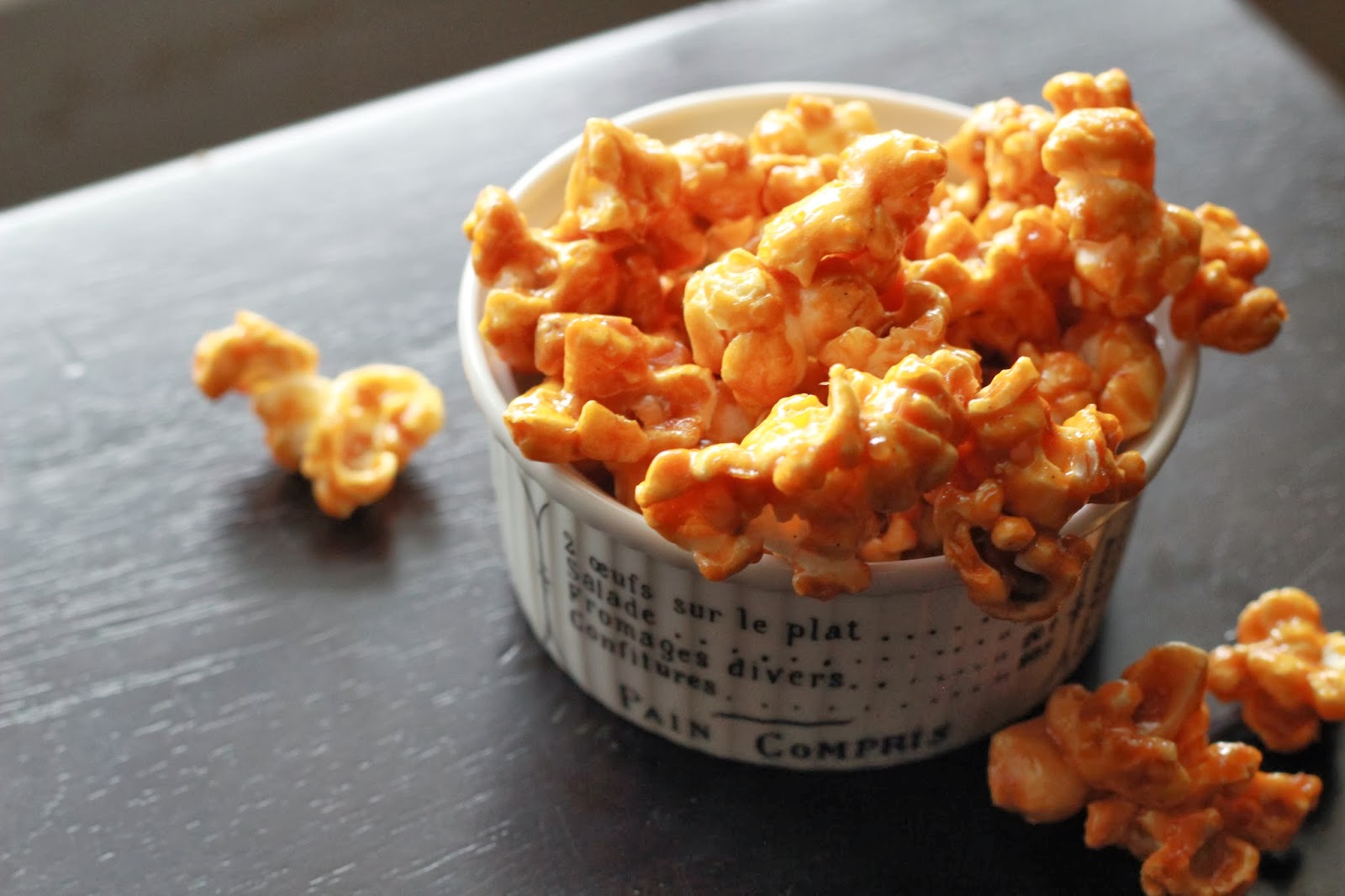
Basics: Popcorn... and Salted Caramel Corn


I thought I would take a little break and insert a simple recipe here, it's been a while. 

Really, basic popcorn is very easy, and I prefer it so much to any bagged microwave popcorn.
You can flavor it however you wish, and more likely than not it'll be less salty and greasy than anything you'd pull out of the microwave.


Here in the US most corn you can find for purchase is GMO. However, popcorn is not; popcorn wouldn't be popcorn if it were modified. It wouldn't pop if it's structure were changed.

Some nights dinner is light and simple over here- a pureed soup and popcorn. Maybe a salad on the side, perhaps apples, pears, cheese, and almonds.


Sometimes I like to use coconut oil and add a little salt and curry powder to the finished popcorn.
Other times, maybe and a different spice blend.
Truffle salt?
Rosemary or garlic infused oil?
Finely shaved Parmesan?
Dill, onion and garlic powders?


I was thinking about making homemade Christmas gifts this year- and making things that are consumable. Things that are generally used, enjoyed and gone. They don't have to be put away, they take up space on a mantle, no one has to wonder, 'now what am I going to do with this?!' and hopefully no one feels the need to re-gift them.


I can't make any promises, but I was hoping to post a few things that might make nice gifts.
Well, other than gifting purposes, caramel corn is also good to have around for a party or if you're expecting people to stop by and visit.

This is a caramel corn version without the use of corn syrup, and I'm happy it worked out.
The idea comes from Alana Chernila's Homemade Pantry, where there's a recipe for maple caramel corn.
I liked that recipe enough initially, thought it wasn't my all time-favorite, and I wanted to make some changes.


The most notable change is the use of golden syrup.
Golden syrup is a gorgeous raw sugar syrup, already caramel-y, a little deep with some molasses notes- really great stuff.

I'd like to tweak the maple syrup recipe to make it more to my liking, but that will have to wait a little bit for sometime down the line.
Maybe I'll try another time with little molasses in the mix, or honey, perhaps different types of sugar.

Also, as an aside, if you're wary, I would recommend starting with less salt than called for. Perhaps go for 1/2 t (3 g) and add more after tasting the caramel but before adding the baking soda. I've used both amounts, I like both but I would say it depends on personal taste. The baking soda adds some semblance of salinity if that helps at all.

And be careful of hot syrups... hot sugar = nasty burn.


Additions for the caramel corn I'd like to try including:
a little cinnamon stirred into the caramel at the end of cooking
maybe a little chili powder
slivered almonds or pecan pieces sprinkled on top before baking
drizzle of melted and tempered chocolate after the popcorn has cooled
dried cranberries stirred in at the end

Basic Popcorn
makes about 9 c (around 2 L)

1/2 c (110 g) popcorn kernels
2 T (30 ml) cooking oil (such as grapeseed, safflower, sunflower, or coconut)
Seasonings, as desired

In a 5 qt (about 5 L), heavy dutch oven heat the oil over medium-high heat until it shimmers. Add the popcorn and shake the pan to distribute evenly. Cover the pan and continue to cook, shaking occasionally at first, then more vigorously when the corn really starts to take off. 
Once the popping starts to diminish, and there are 2-3 seconds between pops, take the pan off the heat. Remove the popcorn to a large bowl, set aside if using for caramel corn, or season as desired.

**************************

Salted Caramel Corn

9 c popcorn (see above recipe)
7 T (100 g) unsalted butter
1/2 c (120 ml) golden syrup (preferably Lyle's)
1/3 c plus 1 T (93 g) raw cane sugar
3/4 t (5 g) fine sea salt 
1/2 t (5 ml) vanilla extract
1/2 t (3 g) baking soda (bicarbonate)

Preheat oven to 225 F/110 C.
Lightly grease a 4-sided sheet pan and set aside. 
In a medium saucepan, combine the butter, syrup, sugar, and salt. Stir over medium heat until the mixture comes to a boil. Stop stirring, and let the caramel cook 5 minutes. Remove the pan from the heat and stir in the vanilla. Add the baking soda, and stir (careful, it will foam up). 
Pour the caramel over the bowl of popped corn and fold quickly but carefully, so as to coat, but not deflate or crush the popcorn too much (don't worry, it doesn't have to be perfect- the caramel will even out a little later). 
Place the pan of popcorn in the oven and bake 1 hour, stirring every 15 minutes. 
Remove the pan from the oven and stir again. Let cool completely, stirring every few minutes until the popcorn no longer adheres to the pan. 
Once cool, store in an airtight container. 
Best within 5 days. 

Saturday, September 7, 2013

Salads and Menu Planning


Salads are one of those things that people either love to make, or hate to make.
At our house, receiving an assignment for making the salad for dinner could usually elicit a groan (this was, no doubt, because salads are both tedious and completely boring).

Having said that, I don't think people are quite so strongly polarized when it comes to actually eating salad.


Most of the time I prefer to make plated composed salads to tossed salads- for several reasons.
It was always one of those frustrating things that once a salad is tossed, all of the exciting additions to the greens fall to the bottom of the bowl. If the person plating the salads wasn't paying attention or didn't care, those people at the beginning of service would end up with a plate full of leaves, while others would have some leaves along with lots of the other goodies mixed in.
Composed salads are visually appealing and even when it comes to those extra things that make salads specific.
Things are arranged more neatly and divided more evenly.

Part of the problem with those composed salads is that they take a little more last-minute time and attention. It's fine if you're organized and all prepared, but can be a tad difficult if you're in a rush.

My preference are the more "green" greens, such as a spring mix that includes a variety of lettuces and other greens such as spinach and arugula.
And please don't think that just because all those greens look like leaves they all taste the same. Nope.
While they could be subtle, the differences are there.
Some, like arugula or watercress, are peppery. Others, such as baby spinach and some of the more delicate lettuces are silky and buttery.


Another great reason for the composed salad: once very delicate greens are tossed with a vinaigrette they being to wilt. They will remain more their fresh and perky selves without being fully coated in vinaigrette. The effect isn't quite the same if someone either sits down to, or is served a flat salad.
It's not so much a problem for the more sturdy lettuces like iceberg or romaine.
But nutritionally, there's more value vitamin and mineral-wise in the deeper, darker greens. Just keep that in mind when creating a salad or making a choice at the market.


Everything in a salad has a purpose (or more likely, they have more than one).
Some things add color, others bring texture to the dish (both visual and gustatory/tactile), and others add  variety of flavor. All are important to think about when making a salad.

I'm not quite sure if I've mentioned all of this before, of if I've only thought about saying it (so bear with me here). I think it's important to think about all the elements when putting a salad together. In fact, I sort of go about putting a salad together in the same way I put a meal together. Let's say it's three courses: salad, main, and dessert. Fist thing is to choose a place to start and build the meal around that. Maybe I choose the dessert first:  crème brûlée. Then I think about things that are characteristic for that dessert- let's say cold, delicate flavor, and cream. I don't want a lot, or maybe even any, cream in the rest of the meal. Creamy dressing on the salad, heavy creamy sauce with the main, creamed spinach for the vegetable... it's too much. That, and I don't want a plate full of creamy shades of white (sorry, but it's not the most appetizing thing to see).


Another way to go is to balance things that compliment and contrast at the same time. The main could have a lot of flavor if you use ingredients like wine, lemon, garlic, and herbs. What about a roast chicken or roasted chicken breasts?
When I serve a main, it's usually with a vegetable and a starch. Because we're planning on a meat with a lot of flavor, at least one of the sides should have a quieter tone. Let's say a rice pilaf made with chicken broth, onion, and herbs, with flavors that aren't overly bold and don't fight those of the meat.
And for the vegetable? I might go with roasted garlic broccoli. It has it's own flavor, a kick with the red pepper flakes, but in my opinion it still works with the rest of the meal. Maybe sauteed asparagus (a little olive oil, salt and pepper) would be nice as another option.
I don't necessarily think you have to stick to one style, theme, or country when planning a meal, but the foods do have to work together in some sense.
They can contrast  to some extent, but they still have to be complementary. To round it all off (and to start), a very fresh-tasting salad with freshly made vinaigrette, very simple with just a variety of greens and the vinaigrette if the main is more complex, and as things turn out it's not a completely overwhelming meal to the senses (though hopefully it's appealing).


So hopefully, with that short meal analogy, there's a sense of how a salad can be put together. Think of variety, think of flavor, compliments and contrast, along with colors and textures.

I hadn't planned on writing so much as I look back at this- it's just salad.


And that salad I made...
I started this post a while back. The salad looked good, but I wasn't a huge fan of the vinaigrette... I'll have to work on it a bit. There were certain flavors I wanted to include, but it didn't quite work out. 
The addition of raspberries was an afterthought- that bit of extra fruitiness was really nice and it certainly helped.

That said, I know I said it's great to make something that's visually appealing in addition to being pleasant to taste. But I (and hopefully everyone else) would much rather eat something that tasted fantastic but didn't look exceptional than having things the other way around.  And that's why this particular salad will not be served to anyone any time soon.

Once the vinaigrette is "fixed" I think some other potential additions could be:
sliced strawberries
ripe cubed mango
avocado
grilled chicken

Sunday, January 27, 2013

To Poach Fish


To poach is to gently cook in liquid, the liquid being a stock, broth, wine, or maybe a syrup depending on what is being prepared.
The temperature remains fairly low, and most of the time poaching calls for the liquid to remain just at a simmer. Fish is fragile, and this helps to maintain it's shape and texture.


We will first prepare a court bouillon in which to poach the fish.
The purpose of the method is to delicately flavor the fish, and since the heat is low and the cooking medium a liquid that will completely envelop the fish, the dish will also retain moisture.


The purpose of this post is mostly as a poaching lesson and I think it's a good technique to know. However, I also think that nowadays people want and expect more flavor from their food than what poaching would deliver (thus, sauces can save the day, so to speak).  Poached fish is something you don't see as often as other preparations.


The flavors are definitely mild, and I can't imagine you would want to serve it alongside anything that might overpower it. 
Some days are mild fish sorts of days, and that's ok.
In this case, I'm keeping it very simple: there's no sauce other than the poaching liquid. You could, of course, prepare a vinaigrette or beurre blanc for the fish if you so desire. Likewise, a caper-y, buttery sauce with a little bite might be nice, too.
And it's pretty healthy and relatively light since there's just a bit of butter used to saute the leeks, which then becomes part of the poaching liquid.


When making poached fish, you'll probably want a more sturdy fish as opposed to those more delicate types that could potentially fall apart in the cooking liquid. And you could certainly poach smaller fillets of fish, maybe 5-8 oz. each, but the cooking time will differ. Pay attention, watch for them to be cooked through and don't overcook. Those fish that have a thicker fillet, and those with more dense flesh will take a little longer. It's not so much science as it is common sense.


I went to the store and after speaking with the fishmonger, it seemed that tilefish was along the line of what I was looking for (and it was fresh). I've never had tilefish before, but the cost of sea bass in quantity is generally prohibitive, and the halibut I was prepared to buy prior to seeing the fish selection did not end up being my best option.


Flexibility is important when dealing with fish. I'm not saying I'm the most flexible person out there when it comes to food after I've finally decided what I want, because I can promise that I certainly am not (however, I can honestly and thankfully state that my adaptability has improved). If I have my mind set on something, and the planned menu is not to be... well, there's nothing that can be done.
Anyway, rigidity will not help you in the least when it comes to fish. What you really want may not be any good or even available when you go shopping (especially if you happen to be of the landlocked persuasion).
Sure, you can have a general idea of what you want, but speak with the fishmonger. See what's fresh. See what he might recommend and go from there.


P.S.
Parsley does wonders for brightening the look of a poached fish. Not that it's completely unappetizing,  but visual appeal can be pretty important for food.

Poached Fish With Leeks
(Poaching technique from Mark Bittman)
Serves 4

2 c (480 ml) water
1/2 c (120 ml) white wine
1 lemon, thinly sliced
1 medium onion, roughly chopped
1/2 rib celery, roughly chopped
3 cloves garlic, crushed and roughly chopped
10 black peppercorns
1 t (7 g) Kosher salt
5 sprigs of thyme
1 bay leaf
3 T (42 g) butter

3 medium leeks, white and light green parts only (sliced lengthwise, then cut crosswise into 1 cm to 1 inch pieces, washed twice in cool water to remove sand and dirt, and drained)

2 fish steaks, skin on, 1 lb. each (or a little less)

Additional water, white wine, fish or vegetable broth if needed

Lemon for serving (optional)

Place the water, wine, lemon slices, onion, celery, garlic, peppercorns, salt, thyme, and bay leaf in  a medium saucepan. Bring the mixture to a boil, reduce the heat, and simmer 10 minutes. Strain, discard the solids, and cool the broth.
Melt the butter in a large dutch oven or saucepan over medium heat. Saute the leeks until softened, a few minutes. Place the fish steaks on top of the leeks and pour enough stock to just cover the fish (add a bit of extra liquid if necessary). Bring to a full boil, cover, and remove the pan from the heat. Let sit at least 10 minutes to finish cooking in the residual heat. The fish will be done when it is opaque and flakes easily with the tip of a knife.
Carefully remove Serve the fish with leeks and some of the poaching liquid, salt and pepper for individual seasoning, as well as wedges of lemon if desired.

Wednesday, October 17, 2012

Basics: Chicken Broth


Chicken broth was a project I started in July or August.
I know.
You may be saying, "What are you doing thinking about chicken broth that time of year?"
As a matter of fact, it had been a point of discussion (and suggestion), and the truth is that chicken broth is without season. (No, not without seasonING, just without season.)
And I figured that herbs and vegetables were good at that moment, so why not take advantage of it?
I'm not saying that everyone loves a steaming bowl of chicken soup in August.


But everyone probably has a recipe for chicken soup. Every culture has a variation, so there must be something to it (and yes, it's good).
There was a time I went to Mexico with my brother and a neighbor, and it was in early summer. We stayed in the mountains outside of Acapulco in a monastery. I can't remember exactly what went on, but there was a celebration during out stay, and several parents were visiting.
Some of the mothers made chicken soup. It was a little different version of chicken soup than we were used to, with pieces of corn cob and chicken talons included.


As Americans, we weren't used to seeing claws in our soup. Lucky for me, I wasn't one of the boys that the Mexican mamas were doting on. Ha. And so, my brother and our friend (both teenage boys) stared at their bowls, probably slightly shocked and confused- maybe a couple other thoughts and feelings, not knowing what they were supposed to do with the chicken feet, and not wanting to be offensive.
But the talons were something special to these women, and reserved for special people. I guess we can think of them as an expression of love.

FYI, the claws are supposed to add some nice flavor, and they can be nibbled on.
I don't think the boys did any nibbling, but instead, the feet were discreetly moved off to the side of the plate.


The other good reason for this post is that I don't think there are a lot of people who make chicken broth.

Then again, how often is it used? All the time.
Maybe people solely want the convenience factor, I don't know.
Why not know what goes in it?
Why not make this a skill you have successfully mastered?

Weekend afternoon at home business. Lazy day business. Rainy day business.
It smells homey.


For sure, a homemade chicken broth will not taste like the canned variety. Looking at a label, one of the ingredients is yeast. So, it's probably to help boost the flavor, but how many people will use something like yeast when making their own broth?
Few, if any.


Fresh chicken broth is beautiful.

It can be stored for later use in the freezer if you make more than you are able to use, or are unable to take advantage of it after it's been made.
Use it to make rice, risotto, or couscous.
Use it as a base for sauces.
Use it for soup- add pieces of chicken, vegetables, rice or pasta.

Maybe it's a good project if you find a good deal on some good chicken.


I know some like to make a stock with the chicken left whole, but I prefer to cut the chicken into pieces since I imagine the chicken will do more for me with more exposed surface area. And it's always good to practice taking a chicken apart.

Chicken broth will be more flavorful if the whole chicken is used- inedible neck, back and all. More flavor comes from the bones and marrow than you might imagine.
But, if you're not comfortable with that, you could probably buy chicken pieces or ask the butcher to take it apart for you.


I will point out that this recipe does not include salt. It's best, in my opinion, to wait until it's finished cooking to season the broth. Or, wait until you know what you will do with it and then salt it. For example, if you had your perfectly seasoned chicken broth and decided you wanted to reduce it and make an intense little sauce, the broth could turn out much too salty.


After it's all finished and seasoned with salt, I think the plain soup would definitely be nice with some ground black pepper to finish.
The chicken meat may be a bit dry since it's been thoroughly cooked and the flavor will have diminished considerably as it was given up to the broth, but the meat can be removed from the bones and used for chicken salad or in soup. If you're doing something fabulous, however, you may want some new, freshly-roasted chicken to use in the broth.
You can certainly experiment with a recipe for chicken broth- there are things you may love, but other things you don't like so much. Carrots add a lot of sweetness. If you don't like that, just eliminate them from your broth. Perhaps next time I make it, I'll take away the carrot, add more onion and try adding some fresh slices of ginger while it's cooking.

There are two versions of this recipe. The first recipe will yield a deeper color and richer, more roasty flavor. The variation that follows makes a lighter broth.


Chicken Broth
End yield is about 7 cups, or 1500 ml

3 1/2 lb (1.6 kg) chicken (free range and organic if possible)
2 T (30 ml) neutral oil, such as peanut or canola oil
1 large onion, halved, peeled and diced large
1 bulb of garlic, halved crosswise
2 1/2 qt. (about 2.5 l) water
4 whole cloves
2 medium carrots, broken into rough pieces
3 ribs of celery, broken into rough pieces, plus a handful of celery leaves if you have them
1 medium parsnip, chopped into rough pieces
1 medium leek, halved lengthwise, rinsed of dirt, and cut into 1" pieces
1 t black peppercorns (3g)
1 bay leaf
8 sprigs of fresh thyme
12 parsley stems, leaves removed and saved for another use
10 sprigs of fresh dill
Salt to season

Rinse the chicken well with cold water and remove any excess fat. Cut the chicken into pieces (thighs, legs, wings, breasts, and the back cut in two crossways)
Heat the oil in a large stockpot over medium heat. When the oil shimmers, add the chicken parts and sear on all sides until golden brown. Work in batches if necessary, and once each piece has been sufficiently browned remove to a large plate. Immediately add the diced onion and halved garlic and saute until the onions have caramelized slightly. Add approximately half of the water to the stockpot, and scrape the fond and onions from the bottom of the pot.  Add the chicken back to the pot and pour the rest of the water into the pot along with the cloves, carrots, celery, parsnip, leek, peppercorns, bay leaf, thyme, parsley stems, and dill.
Bring the ingredients to a simmer over medium heat. Continue simmering for 1 hour and skim off any scum and impurities as they rise to the top of the pot and discard.
When the broth has finished cooking, pull out the chicken pieces and set aside on a plate. Strain the herbs and vegetables from the broth with a sieve set over a large pot or bowl.
If using soon after the broth is made, let it rest for a bit to let the fat rise to the surface. Skim off the fat, season to taste with salt, and use as desired.
If saving the stock for another day, let cool and refrigerate. Remove the solidified fat from the surface of the chicken broth prior to use and season to taste with salt.


Light Chicken Broth:

The above recipe remains the same for the most part, however, the differences are:

There is no oil used
The large onion used above should be cut in two lengthwise and studded with the cloves

After the chicken is rinsed, trimmed and cut, place all ingredients in a large stockpot and bring to a simmer over medium heat.  Continue the recipe as above.

Saturday, August 25, 2012

Mayonnaise


Mayonnaise is an emulsion of oil in a liquid base, and one of the classic French sauces.
To make mayonnaise, oil is added very slowly and beaten into a liquid mixture (which includes egg yolk and acid such as lemon juice). All the while it is whisked, the oil is broken down into smaller and smaller droplets. The mixture becomes thick as oil is suspended within the liquid and becomes mayonnaise.

In and of itself mayonnaise is fine and dandy. But to be honest, it's something I rarely use or crave.
As part of a thicker salad dressing, yes, but as a necessity on a sandwich? Not so much.


About a year ago out of complete necessity (trust me on this), I made mayonnaise.
Now, I knew what was in it, but had never made it before. Luckily the version I threw together turned out just fine.
On to figuring out just what I did...  and well, this isn't exactly what I did, but since this particular recipe has been successful a few times, I've got the very helpful element of reliability on my side.


Homemade mayonnaise is much different than store bought. It's amazingly different.
Perhaps life-changeingly so as far as condiments go.
Just how can a condiment change your life?
Well, it may at least change your perception of mayonnaise.
But I know many people would prefer the convenience of store bought mayo, and that's fine.


Anyway, first of all, you know this condiment is fresh and you know exactly what went into it.
Then again, when making it at home, you're technically taking a walk on the wild side since a raw egg yolk is used. If you know the chickens personally though, you may not feel like you're taking your life into your hands.  Pasteurized eggs are also an option.


Homemade mayonnaise is kind of impressive. Don't you think it would really impress your friends and relatives if you told them you made mayonnaise?
It CAN be done, and besides that, it can be said to be creamier and more flavorful than the store-bought version (as well as a lovely soft shade of pale yellow due to the egg).
Since homemade mayonnaise is much more perishable than store bought I suddenly wonder just what is in the bottled mayonnaises that makes them last as long as they do.


One nice thing about mayonnaise as a sauce is that it's versatile.
It can be spread onto a sandwich.
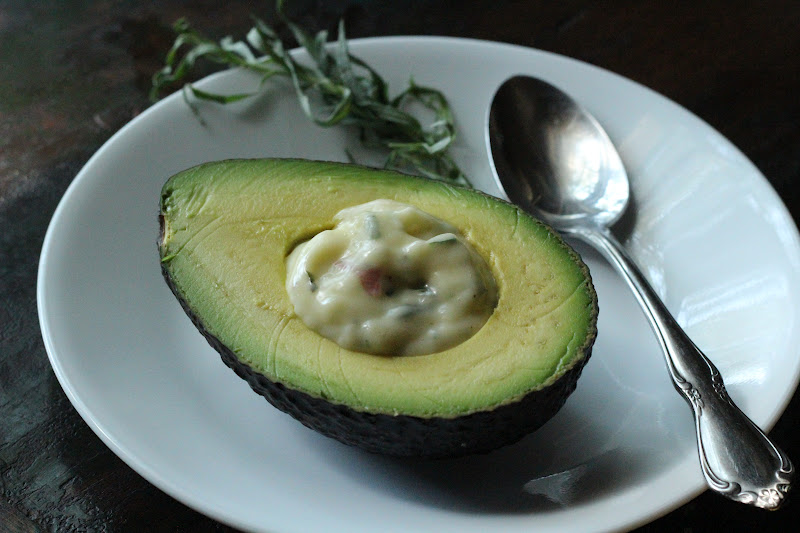
It makes a nice little dressing when spooned into halved avocados (I think this is my favorite use).
Fresh mayonnaise can become a great dip for crudités or shrimp cocktail.
Or use it as part of a potato salad perhaps.

(Aioli is a version of mayonnaise, often served with seafood or vegetables, but by definition it has to have garlic.)


The reason we use something like canola oil (vegetable oil, sunflower oil) for the mayonnaise is because it is a neutral-tasting oil (as compared to olive oil, sesame oil, walnut oil). Also, while it may sound like a good idea to use it, olive oil will apparently not always provide you with a stable mayonnaise: it can separate. 
Perhaps you could try making mayonnaise with half canola and half olive oil for some of the flavor, but I don't know that I would add more olive oil than that.


Mayonnaise can be flavored however you would like: garlic, herbs, spices... the variations could be practically endless.
But this is how I like it- the light licorice flavor of tarragon with the bite of raw shallot.


Shallot and Tarragon Mayonnaise
makes about 1 1/3 cups 

1 large egg yolk, room temperature
1/2 t Dijon mustard (5g)
1 T freshly squeezed lemon juice (15 ml)
1 t white wine vinegar (5 ml)
1 c canola oil (240 ml)
1 T minced shallot (10g)
1 T minced tarragon (4g)
1/2 t salt (3g), plus more to taste
1/4 t freshly ground black pepper (1g), plus more to taste

Whisk together egg yolk, Dijon mustard, lemon juice, and vinegar until combined. Slowly whisk in the oil, in a very thin stream, beginning a few drops at a time. Continue very slowly drizzling in the oil, whisking all the while, until all of the oil is combined and the mayonnaise is very thick (this could take 10 minutes). If at any point you add a little too much oil, stop pouring, and whisk the mayonnaise mixture until the oil is fully incorporated, then resume the slow addition of oil with the whisking. Once the mayonnaise is completely emulsified, whisk in the shallot, tarragon, salt, and black pepper. Taste the mayonnaise for seasonings and add more salt and pepper as necessary. 
Refrigerated mayonnaise kept in a tightly closed container will keep for a week at most.