Thursday, September 13, 2012

Sydney Photos


Sydney Opera House. 


The Sydney Harbour Bridge. 


There's quite a bit of detail on the roof of the Opera House. If you double click, you may be able to see more closely.


Last time I visited Australia, I picked up one of Bill Granger's books- which I love. This time, a breakfast stop was made at bills. Tough decision, but I finally went with brown rice porridge with sweet white miso, coconut cream and mango. Really, how often does one want to order porridge for breakfast? The photo is of a cousin's Australian breakfast. Another Australian cookbook author (and food stylist) I love is Donna Hay, who's also got a lovely magazine. There was also a visit to Billy Kwong's just a couple doors down for dinner one evening. The food was amazing, different than the Chinese food I've been used to all my life (I suppose mine's been very Americanized). 
But the food in Australia is so beautiful and fresh- that's what I love about it.


St. Mary's Cathedral.


Nighttime walks along Darling Harbour are great, and on Saturdays during much of the year there are fireworks. Mövenpick ice cream makes for an amazing treat during the fireworks display.


Beautiful beaches at Cronulla. I think this is where my sunglasses case decided to make a home (no worries, just the case).


There's a big cafe culture in Australia...
Monday, September 3, 2012

Seared Scallops and Beurre Blanc


Fresh, meaty scallops, sweet and tasting of the sea are a nice treat.  
They're great as an appetizer, as a first course, or as a light dinner or lunch on a bed of spring greens.

Most of the time, having one small, perfect something is better than a lot of the same. 
Moderation.  
There's some satisfaction in that, and things are certainly made more special. 


When selecting scallops, make sure they are fresh, white, firm, and practically odorless (at least they should be nowhere near "fishy" in scent.)

The key when handling scallops is keeping them fresh and cold, using them soon after purchase, and not overcooking them. Texture is superior when leaning more towards "silky" and less towards rubber
If quickly seared over a high heat, the scallops will gain a golden crust and retain their moist and tender interior.  


As fas a beurre blanc goes, it's a simple pan sauce, a classic French sauce, and great with seafood.
Like mayonnaise, beurre blanc is an emulsified sauce. However, instead of being an oil emulsion, it's a butter emulsion.
And, being a warm emulsion, the sauce can "break" (separate) if it becomes too hot. The good news is that it can be saved. A little cool water quickly whisked into the sauce should re-emulsify it.


Pan sauces are good tricks to have up your sleeve, and the nice thing is that you don't need a lot to gain great flavor.


Seared Scallops with Beurre Blanc
serves 12 as an appetizer, 4 as a light meal (maybe on a bed of spring greens)

12 large sea scallops
Salt
Freshly ground black pepper
9 T butter (127g), divided
1/3 c white wine (80 ml)
3 T white wine vinegar (45 ml)
2 T minced shallot (about 1 small shallot) (18g)
2 t fresh thyme, minced (1g)

Pat the scallops dry and remove the small ligament attached to the side of the scallop if present. Sprinkle scallops lightly with salt and pepper on both sides.
Heat a large skillet over medium-high heat and add 1 T (14g) of butter. After the butter has melted, rotate the pan so that the butter coats the bottom of the pan. Add the scallops to the hot pan and sear until golden brown. Flip the scallops and sear on the other side until just cooked through (the scallops will only cook about 5 minutes total). Remove the scallops to a platter to rest. 
To the hot pan, add the white wine, white wine vinegar, and shallot. Cook the mixture, scraping the bottom of the pan to incorporate the caramelized bits, until the liquid is reduced to about 3 T. Add the thyme and stir through. Reduce the heat to low and carefully pour any scallop juices from the platter into the pan.  Add about half the remaining butter, stirring the mixture until it has completely melted. Remove the pan from the heat. Cut the remaining butter into 4 pieces and add them to the pan. Swirl the pan to mix the butter into the rest of the sauce. Plate scallops as desired and spoon sauce over the scallops. 

Saturday, August 25, 2012

Mayonnaise


Mayonnaise is an emulsion of oil in a liquid base, and one of the classic French sauces.
To make mayonnaise, oil is added very slowly and beaten into a liquid mixture (which includes egg yolk and acid such as lemon juice). All the while it is whisked, the oil is broken down into smaller and smaller droplets. The mixture becomes thick as oil is suspended within the liquid and becomes mayonnaise.

In and of itself mayonnaise is fine and dandy. But to be honest, it's something I rarely use or crave.
As part of a thicker salad dressing, yes, but as a necessity on a sandwich? Not so much.


About a year ago out of complete necessity (trust me on this), I made mayonnaise.
Now, I knew what was in it, but had never made it before. Luckily the version I threw together turned out just fine.
On to figuring out just what I did...  and well, this isn't exactly what I did, but since this particular recipe has been successful a few times, I've got the very helpful element of reliability on my side.


Homemade mayonnaise is much different than store bought. It's amazingly different.
Perhaps life-changeingly so as far as condiments go.
Just how can a condiment change your life?
Well, it may at least change your perception of mayonnaise.
But I know many people would prefer the convenience of store bought mayo, and that's fine.


Anyway, first of all, you know this condiment is fresh and you know exactly what went into it.
Then again, when making it at home, you're technically taking a walk on the wild side since a raw egg yolk is used. If you know the chickens personally though, you may not feel like you're taking your life into your hands.  Pasteurized eggs are also an option.


Homemade mayonnaise is kind of impressive. Don't you think it would really impress your friends and relatives if you told them you made mayonnaise?
It CAN be done, and besides that, it can be said to be creamier and more flavorful than the store-bought version (as well as a lovely soft shade of pale yellow due to the egg).
Since homemade mayonnaise is much more perishable than store bought I suddenly wonder just what is in the bottled mayonnaises that makes them last as long as they do.


One nice thing about mayonnaise as a sauce is that it's versatile.
It can be spread onto a sandwich.
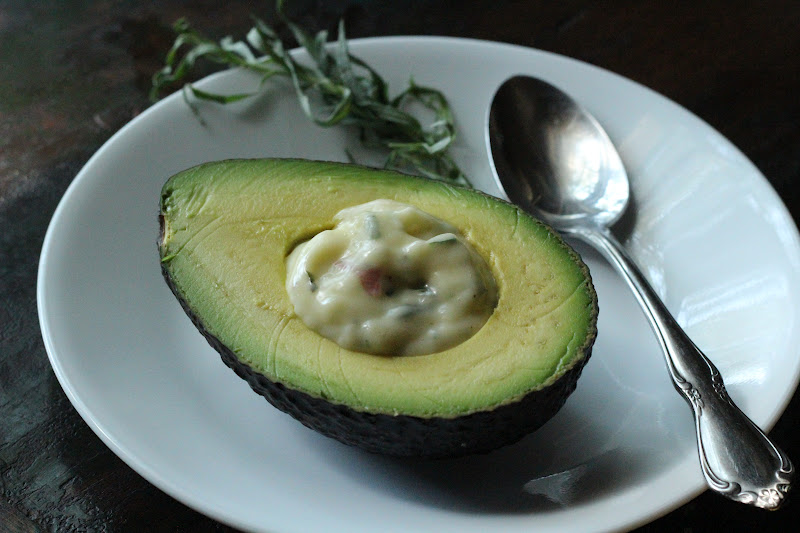
It makes a nice little dressing when spooned into halved avocados (I think this is my favorite use).
Fresh mayonnaise can become a great dip for crudités or shrimp cocktail.
Or use it as part of a potato salad perhaps.

(Aioli is a version of mayonnaise, often served with seafood or vegetables, but by definition it has to have garlic.)


The reason we use something like canola oil (vegetable oil, sunflower oil) for the mayonnaise is because it is a neutral-tasting oil (as compared to olive oil, sesame oil, walnut oil). Also, while it may sound like a good idea to use it, olive oil will apparently not always provide you with a stable mayonnaise: it can separate. 
Perhaps you could try making mayonnaise with half canola and half olive oil for some of the flavor, but I don't know that I would add more olive oil than that.


Mayonnaise can be flavored however you would like: garlic, herbs, spices... the variations could be practically endless.
But this is how I like it- the light licorice flavor of tarragon with the bite of raw shallot.


Shallot and Tarragon Mayonnaise
makes about 1 1/3 cups 

1 large egg yolk, room temperature
1/2 t Dijon mustard (5g)
1 T freshly squeezed lemon juice (15 ml)
1 t white wine vinegar (5 ml)
1 c canola oil (240 ml)
1 T minced shallot (10g)
1 T minced tarragon (4g)
1/2 t salt (3g), plus more to taste
1/4 t freshly ground black pepper (1g), plus more to taste

Whisk together egg yolk, Dijon mustard, lemon juice, and vinegar until combined. Slowly whisk in the oil, in a very thin stream, beginning a few drops at a time. Continue very slowly drizzling in the oil, whisking all the while, until all of the oil is combined and the mayonnaise is very thick (this could take 10 minutes). If at any point you add a little too much oil, stop pouring, and whisk the mayonnaise mixture until the oil is fully incorporated, then resume the slow addition of oil with the whisking. Once the mayonnaise is completely emulsified, whisk in the shallot, tarragon, salt, and black pepper. Taste the mayonnaise for seasonings and add more salt and pepper as necessary. 
Refrigerated mayonnaise kept in a tightly closed container will keep for a week at most.

Thursday, August 16, 2012

Cherry Clafoutis


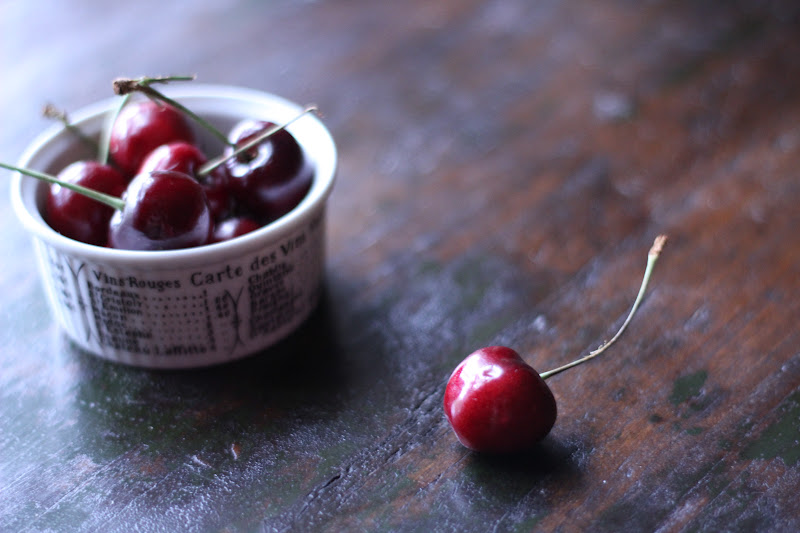
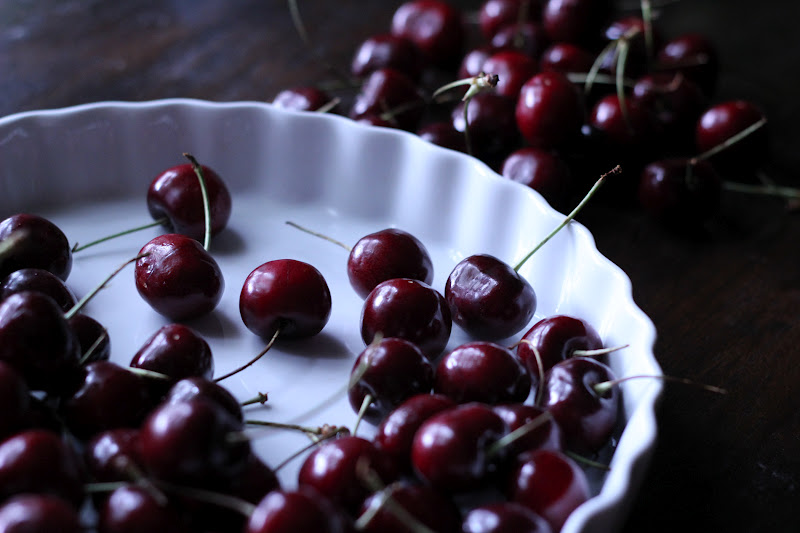
The other day I was at the grocery and saw there were lots of cherries, so I thought it might be a good idea to buy some and do something with them.

Cherries are all well and good as they are fresh, but I prefer them at least a little cooked.
Because when cooked, I think the flavor intensifies and the cherries become juicy, more cherry-flavored.


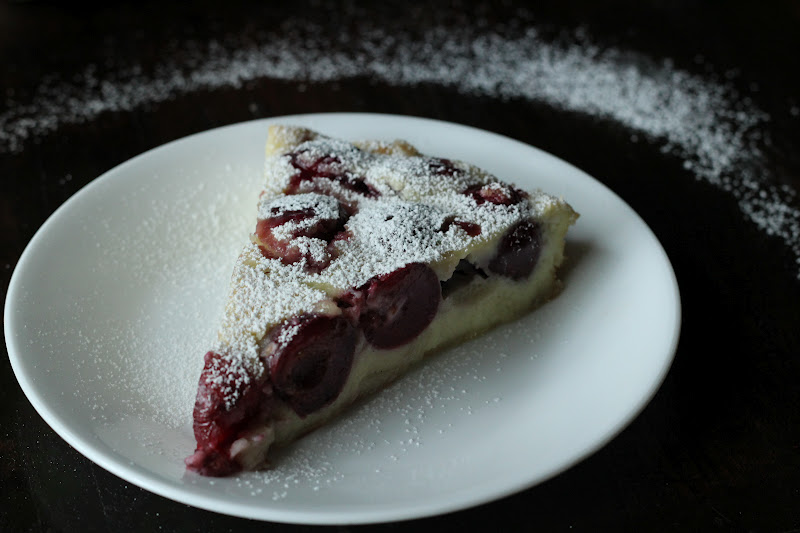
Clafoutis is a custardy, cakey French dessert made with fresh fruit. Of course, any fruit can be used- seasonal changes can be nice, but cherry is classic.
And late summer is the perfect time for the cherry version.
Like I said, the good news (if someone doesn't like cherries) is that you can make the dessert with other fruits. I wouldn't have thought it possible that cherries might not be liked, or even just tolerated, but a roommate I once had hated them. Cherry haters do exist. As do chocolate haters.


It's just a simple batter- rich, creamy, and eggy (very similar to crepe batter), with cherries bobbing about until they whole thing is baked and the warm sweet-tart little jewels become suspended.
The batter is a perfect medium to showcase the cherries.
It's not dull, not boring, but it's sort of neutral, comforting, and wonderful in the same way vanilla ice cream might be described. It's a perfect partner.


No machines needed for this one, just a bowl and a whisk.


If you don't have a cherry pitter, it's not a problem. A knife will certainly work just as well, and I know some people use a bent paperclip to remove cherry pits, but I can't really tell you how that's done.


You are welcome to leave the pits in for the added benefit of extra flavor, but I don't because I'm concerned for people's teeth and there's no real delicate way to spit out cherry pits at table.


One of my favorite flours is almond flour. I like the bit of texture and flavor that it offers, and it's one that I've kept around for several years because it was an integral ingredient for making lovely macarons. 
At one point I read or heard somewhere that clafoutis was traditionally made with almond flour, but I haven't found this statement anywhere (yet), so don't quote me on it. Then again, why not have another good reason to keep almond flour handy?


And yes, I started weighing the ingredients. It's more exact this way.
(It's a habit I would like to get into, but I don't know how consistent I'll end up being.)


Cherry Clafoutis
serves about 8

Butter, for greasing dish
1/2 c sugar, plus extra for dish (116g +)
1/4 t salt (1g)
1 1/2 c half and half or light cream (350 ml)
2/3 c almond flour (50g)
1/4 c tapioca flour (38g)
4 large eggs
1 t vanilla extract (5g)
Scant 1 1/2 lb. cherries, pitted (645g)

Preheat oven to 350 degrees F.
Grease the bottom and sides of a 6 cup (1.4 l) capacity dish (a deep dish pie pan, 10 inch quiche pan, or 9 inch square baking dish will all work). Sprinkle the buttered dish with granulated sugar and turn to coat, knocking out excess sugar.
Whisk together half and half, sugar, and salt until the sugar is dissolved. Add the almond and tapioca flours and whisk until incorporated and no lumps remain.
Add eggs, one at a time, whisking between each addition.
Whisk in vanilla to combine.
Pour a thin layer of batter over the bottom of the dish (it should be less than 1 cm deep). Place the dish in the oven for 5 minutes or so until the batter is set.
Remove the dish from the oven and scatter the cherries over the batter in a single layer.
Re-whisk the remaining batter and pour over the cherries.
Place the dish back in the oven and bake for another 30 minutes, or until the batter is set and puffed, the edges golden.
Remove the finished clafoutis from the oven and let rest and cool at least 20 minutes before serving.
Serve warm or at room temperature, dusted with powdered sugar (and perhaps a little whipped cream).
Refrigerate any leftovers.

Saturday, August 11, 2012

Tomatoes


This time of year, many are inundated with an overflow of garden-fresh tomatoes.

Think of it as a good thing.
The good news is that they're like money in the bank.
You don't have to do too much to or with them and they can add a lot to a meal.


What to do with them?
First, do not refrigerate them, they'll lose their intense tomato flavor and the texture can become mealy.
That would be the reason tomatoes fresh from the garden taste better than those from the grocery store- the tomatoes from the store were most likely refrigerated to keep them from going bad since they probably travelled a distance to get to you.
Tomatoes should be stored at room temperature, not stacked up, not packed in.
They're delicate, give them some space. Air will circulate better, you've left a little less chance for rot, and if they're not stacked they won't be smashed so easily.


Tomatoes are crucial components in many recipes.
Of course, they're at their best when raw, fresh from the vine and warmed by the sun (especially when they don't have a future in the oven or a frying pan). They're sweeter, more tomato-y.
Even if the looks or the color isn't completely magazine perfect, they still taste better.
In fact, I think they taste best when they don't look perfect.
Fighting the elements must do them good.
Heirloom varieties offer different flavors and textures as well as colors and patterns.
And the flavor hasn't been engineered out of them in favor of perfectly circular tennis ball-sized orbs with a just so shade of tomato red and a satiny sheen.


Frequently, things that grow together, go together.
Another way of putting it would be that things that are stereotypical to a certain location or style of food are pretty much that way for a reason.
Tomatoes/basil/Italy.
However, as ubiquitous as tomatoes may be when we think of Italy, they're not really Italian.  Like potatoes and corn, they're an originally imported New World crop.
The good news is that they can go with just about everything, and though normally used as a vegetable, they can become switch hitters and work for the fruit team (to which they really belong anyway).
The strict tomato/vegetable issue must be a mindset thing.
But think about it: what do tomatoes add to a dish?
Sweetness and acidity, which seem like very fruity things to do.


So, what to do with tomatoes?


Sweet and easy to handle, garden-ripened cherry, grape, and pear tomatoes are wonderful left out in a bowl, ready for snacking.

If I use fresh tomatoes, I prefer to use a variety all at once, and I like to cut them differently, too.
The larger ones sliced into rounds, the medium ones quartered or cut into sixths, smaller ones halved or left whole. This way, the tomatoes are more visually appealing with their shapes and textures as well as color and personality (well, as far as tomato variety goes).
There is more involved in eating than just the sense of taste.


Here's a little list to get things started:

Sauces, whether cooked or fresh
Tossed fresh into hot pasta
Soup, such as gazpacho or roasted tomato
Salsa
Tomato salad
Caprese salad
Compote, confit
Roasted
Sauteed
Eaten out of hand
Added to quinoa
On pizza
Tomato tart
In sandwiches
As a relish
Drizzled with olive oil, sprinkled with salt and pepper
Cored and stuffed with tuna salad, chicken salad
Smaller tomatoes stuffed with chevre and fresh herbs


Perhaps an internet search for any of these ideas or including several on-hand ingredients might be helpful if brainstorming isn't fruitful...